


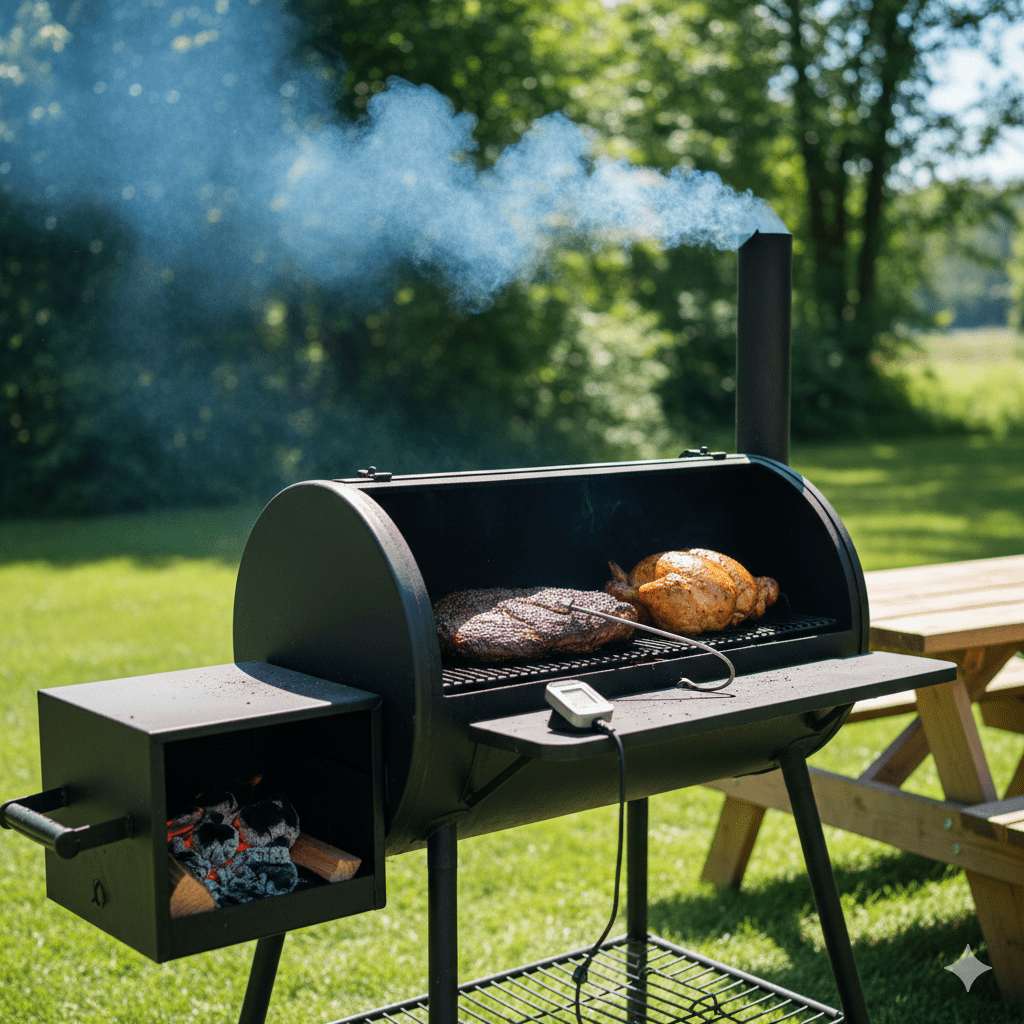
The core question, How Do You Use an Offset Smoker, boils down to one word: control. It’s all about balance. These aren’t automatic grills – no “set and forget” here. Instead, you’ve gotta tweak airflow by adjusting the inlet and outlet dampers. That keeps the heat steady and low. We’ll walk through lighting your fire just right. Then nailing consistent temps. Toss in a water tray to help manage moisture and heat flow. Soon enough, what felt tricky starts working for you. The payoff? Meat so soft it falls apart, packed with flavor after every cook.
What Is an Offset Smoker?
An offset smoker consists of two main chambers: a large cooking chamber where you place your food and a smaller firebox attached to the side (hence “offset”). The design creates indirect heat, with smoke and heat traveling from the firebox through the cooking chamber and out the chimney.
This separation between the fire and food is what makes offset smokers ideal for low and slow cooking. The indirect heat prevents meat from burning while allowing it to absorb smoke flavor over many hours.

Types of Offset Smokers
Traditional Offset Smokers
These classic “stick burners” use wood logs or chunks as the primary fuel source. They’re beloved by purists for their authentic flavor but require the most skill to operate.
Hybrid Offset Smokers
These combine the offset design with features like propane assist or pellet hoppers to help maintain temperature. They’re easier to use but sacrifice some authenticity.
Ready to Start Smoking?
If you’re looking for a quality offset smoker, I recommend the Oklahoma Joe’s Highland Reverse Flow Smoker. It offers excellent heat distribution and durability at a reasonable price point.
Essential Tools You’ll Need
Before firing up your offset smoker, gather these essential tools to ensure a successful smoking session:

- Chimney Starter – The best way to light charcoal without lighter fluid. I use the Weber Rapidfire Chimney Starter.
- Digital Thermometer – Essential for monitoring both meat and smoker temperatures. The ThermoPro TP20 gives accurate readings wirelessly.
- Heat-Resistant Gloves – Protect your hands when handling hot coals or adjusting vents.
- Long Tongs – For arranging coals and wood without getting too close to the heat.
- Spray Bottle – Filled with water, apple juice, or another liquid to spritz meat and control flare-ups.
- Drip Pan – Catches drippings and can add moisture to the cooking environment.
- Wood Chunks or Logs – Your smoke flavor source. Different woods create different flavors.
Must-Have Thermometer
I ruined my first brisket by guessing at temperatures. Now I never smoke without my ThermoPro TP20 wireless thermometer – it monitors both meat and smoker temps simultaneously.
Safety First: Important Precautions
Smoking involves fire and high temperatures, so safety should always be your priority:
Never use an offset smoker indoors or in enclosed spaces. Always place it on a level, non-flammable surface at least 10 feet from structures.
- Keep a fire extinguisher nearby whenever smoking.
- Ensure your smoker is stable and won’t tip over during use.
- Keep children and pets away from the hot smoker.
- Use proper tools to handle hot components – never touch the smoker with bare hands.
- Be cautious when opening the cooking chamber as hot steam can escape.
- Never leave a lit smoker unattended.
- Allow the smoker to cool completely before cleaning or storing.
Choosing Your Fuel: Charcoal and Wood
The fuel you choose significantly impacts your smoking results. For offset smokers, a combination of charcoal for heat and wood for flavor typically works best.

Charcoal Options
Lump Charcoal
Burns hotter and cleaner with less ash. It responds quickly to airflow adjustments but burns faster than briquettes. I prefer this for shorter smoking sessions.
Charcoal Briquettes
Burns more consistently and longer than lump charcoal. The uniform shape helps maintain steady temperatures for extended smoking sessions.
Wood Selection Guide
| Wood Type | Flavor Profile | Best For |
| Hickory | Strong, bacon-like | Ribs, pork shoulder, brisket |
| Oak | Medium, versatile | Beef, lamb, brisket |
| Apple | Mild, slightly sweet | Poultry, pork, fish |
| Cherry | Mild, fruity | Poultry, pork, adds color |
| Mesquite | Very strong, earthy | Beef (use sparingly) |
| Pecan | Medium, nutty | Poultry, pork, beef |
Pro Tip: For your first few smokes, stick with oak or hickory as they’re versatile and forgiving. Avoid using softwoods like pine or cedar, which contain resins that can make food taste bitter and may be toxic.
Premium Smoking Woods
For consistent results, I recommend Cutting Edge Firewood’s cooking wood chunks. Their kiln-dried wood burns cleaner and produces better flavor than store-bought options.
Step-By-Step: How to Use Your Offset Smoker
Follow these steps to achieve great results with your offset smoker:

- Season your smoker (first use only) – Coat the interior with cooking oil and run at 250°F for 2-3 hours to create a protective layer.
- Set up your thermometers – Place digital probes at grate level in the cooking chamber, ideally at both ends to monitor temperature differences.
- Light your charcoal – Fill a chimney starter with charcoal and light it. Wait until the coals are covered with light gray ash (about 15-20 minutes).
- Prepare the firebox – Once lit, pour the charcoal into the firebox. Place 1-2 wood chunks or a small log near (not directly on) the hot coals.
- Preheat the smoker – Close the cooking chamber and firebox doors. Open the intake vent and chimney vent fully to allow maximum airflow.
- Adjust to target temperature – Most smoking is done between 225-275°F. Adjust the intake vent to about ⅓ open and the chimney vent to ½ open once you approach your target temperature.
- Add your food – Once the temperature stabilizes and the smoke turns from white to thin blue, place your food on the cooking grates.
- Manage the fire – Add new charcoal and wood as needed (usually every 45-60 minutes). Make small vent adjustments to maintain temperature.
- Monitor and rotate – Check temperatures regularly and rotate food occasionally to account for temperature differences across the cooking chamber.
Temperature Control Guide
To Increase Temperature:
- Open the intake vent wider
- Add more fuel (charcoal)
- Open the chimney vent wider
- Leave the firebox door cracked open temporarily
To Decrease Temperature:
- Close the intake vent partially
- Close the chimney vent partially (never fully)
- Allow fuel to burn down without adding more
- Never spray water directly on coals

Smoke Quality Matters: Aim for thin blue smoke, which indicates clean combustion and good flavor. Thick white smoke means incomplete combustion and can make food taste bitter.
Temperature Guide for Different Meats
Different meats require different smoking temperatures and times. Use this guide as a starting point:
| Meat | Smoker Temp | Internal Temp | Approx. Time |
| Brisket (12-14 lbs) | 225-250°F | 195-205°F | 10-14 hours |
| Pork Shoulder (8-10 lbs) | 225-250°F | 195-205°F | 10-12 hours |
| Ribs (St. Louis cut) | 225-250°F | Bend test* | 5-6 hours |
| Chicken (whole) | 275-300°F | 165°F | 2-3 hours |
| Turkey (12-14 lbs) | 275-300°F | 165°F | 3-4 hours |
| Beef Ribs | 250-275°F | 200-205°F | 6-8 hours |
*Bend test: When you pick up the rack with tongs and it bends easily with the meat starting to crack on the surface, they’re done.

Never Guess Temperatures Again
For perfect results every time, I use the MEATER Plus wireless meat thermometer. It connects to your phone and sends alerts when your meat reaches the target temperature.
Common Mistakes and How to Avoid Them
Even experienced pitmasters make mistakes. Here are some common ones to avoid:

What To Do
- Preheat your smoker thoroughly before adding food
- Aim for thin blue smoke
- Make small, gradual vent adjustments
- Rotate meat to account for temperature differences
- Use quality thermometers at grate level
- Allow plenty of time – smoking can’t be rushed
- Let meat rest after smoking
What To Avoid
- Opening the cooking chamber frequently
- Using too much wood (causes bitter taste)
- Relying on the built-in thermometer
- Making large vent adjustments
- Cooking by time alone instead of temperature
- Using lighter fluid to start coals
- Panicking when temperatures fluctuate
I ruined my first brisket by constantly opening the cooking chamber to check on it. Every peek drops the temperature by 25-50°F and extends your cooking time. Trust your thermometer and resist the urge to look!
Troubleshooting Common Problems
When things don’t go as planned, use this troubleshooting guide:
| Problem | Possible Causes | Solution |
| Temperature won’t increase | Insufficient airflow, low fuel | Open intake vents wider, add more charcoal, check for ash buildup blocking vents |
| Temperature too high | Too much fuel, vents too open | Close intake vents partially, let some fuel burn down before adding more |
| Thick white smoke | Incomplete combustion, wet wood | Ensure proper airflow, use properly seasoned wood, let wood heat up before placing directly on coals |
| Fire keeps going out | Insufficient oxygen, damp fuel | Open vents wider, use dry fuel, check for water leaks into firebox |
| Uneven cooking | Temperature gradient in cooking chamber | Rotate food during cooking, use tuning plates if available, consider a water pan on the hot side |
| Meat cooking too fast | Temperature too high, meat too close to firebox | Reduce temperature by adjusting vents, move meat further from firebox |

Temperature Swings: Don’t panic about small temperature fluctuations (25°F up or down). It’s normal with offset smokers and won’t significantly impact your results. Focus on the average temperature over time.
Frequently Asked Questions
How long does it take to heat up an offset smoker?
It typically takes 30-45 minutes to properly heat an offset smoker to cooking temperature. Start with fully lit charcoal from a chimney starter to speed up the process. The smoker needs to be thoroughly preheated to ensure clean smoke and stable temperatures.
How often should I add wood to my offset smoker?
Add wood chunks or small logs every 45-60 minutes, depending on your smoker and the wood size. Add just enough to maintain thin blue smoke – 1-2 chunks or a small log at a time is usually sufficient. Too much wood creates bitter-tasting food.
Should I soak wood chips or chunks before using them?
No, it’s best not to soak wood for offset smokers. Soaked wood doesn’t actually smoke until it dries out, and then it produces the same smoke as dry wood. Soaking can also cool your fire and create more steam than smoke. Use dry, properly seasoned wood for the best results.
How do I control temperature in windy conditions?
Wind can significantly affect your smoker’s performance. Position your smoker with the firebox facing away from the wind if possible. You may need to close the intake vent more than usual and add fuel more frequently. Consider using a windbreak if conditions are particularly challenging.
How do I clean my offset smoker?
After each use, once the smoker has cooled completely, remove ashes from the firebox and scrape any large food debris from the cooking chamber. Don’t use soap or water on the interior – the buildup of seasoning (like a cast iron pan) improves performance. Clean the exterior with a mild detergent if needed.

Pro Tips from Experience
After years of using offset smokers, here are my top tips for success:

- Start early – Give yourself more time than you think you need. It’s easier to hold finished meat than to rush cooking.
- The stall is normal – Large cuts like brisket and pork shoulder often “stall” at around 150-160°F for hours. Be patient or consider the “Texas crutch” (wrapping in foil).
- Use a water pan – Placing a water pan in the cooking chamber helps stabilize temperature and adds moisture.
- Consider tuning plates – Metal plates placed inside the cooking chamber can help distribute heat more evenly.
- Keep a log – Record your cooks (temperatures, times, results) to improve over time.
- Invest in quality fuel – Good charcoal and properly seasoned wood make a huge difference in flavor.
- Rest your meat – Always let meat rest after smoking (30 minutes for small cuts, 1-2 hours for large cuts).
The most important skill in offset smoking isn’t technique—it’s patience. Trust the process, make small adjustments, and give yourself permission to learn through experience. Every mistake is just a lesson for your next cook.
Ready to Master Offset Smoking?
For more detailed recipes, techniques, and product recommendations, sign up for our free BBQ mastery guide. You’ll get weekly tips, exclusive recipes, and special offers on the best smoking equipment.
Wrapping Up: Your Offset Smoker Journey
Using an offset smoker takes practice, but the results are worth the effort. Start with the basics outlined in this guide, be patient with yourself, and enjoy the process of learning. Each smoking session will teach you something new about your particular smoker and help you develop your own style.
Remember that great barbecue isn’t just about equipment—it’s about understanding fire management, having patience, and developing an intuition for when meat is done to perfection. With time, you’ll create memorable meals and perhaps even develop your own signature techniques. Happy smoking!

