


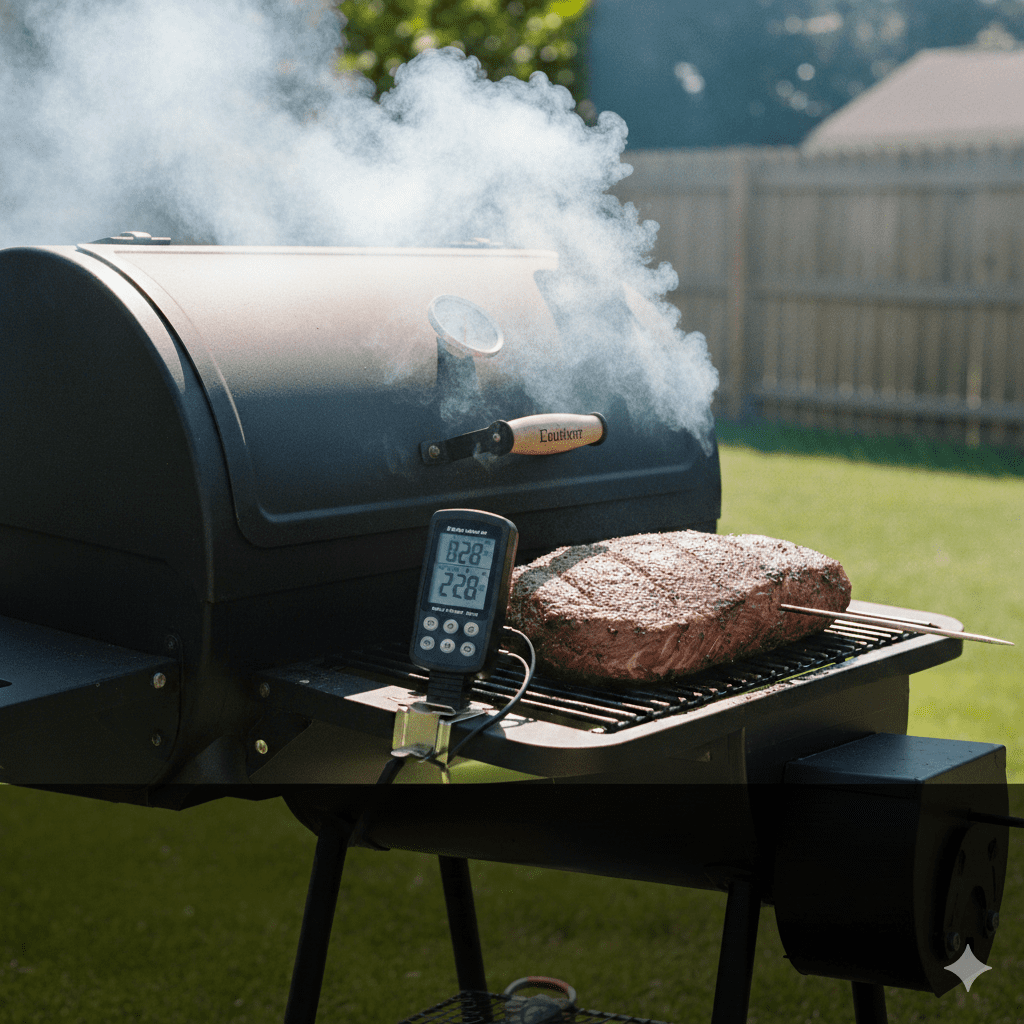
If you’re asking “How Do You Use a Charcoal Smoker”, you’re ready to master the art of barbecue. Using a charcoal smoker involves controlling heat and smoke through careful vent management and fuel placement. You’ll light charcoal, add wood chunks for flavor, maintain consistent temperature, and cook low and slow for tender, smoky results. With the right techniques, you’ll be creating mouthwatering smoked meats in no time.
Essential Tools You’ll Need for Charcoal Smoking
Before you fire up your smoker, gather these essential tools to ensure a successful smoking session. Having the right equipment makes temperature control easier and produces better results.
Basic Equipment
- Charcoal smoker (Weber Smokey Mountain is popular for beginners)
- Charcoal chimney starter
- Heat-resistant gloves
- Long-handled tongs
- Digital meat thermometer
- Digital air probe thermometer
- Aluminum drip pans
- Heavy-duty aluminum foil

Fuel and Flavoring
- Quality charcoal briquettes (Kingsford Original works well)
- Hardwood chunks (hickory, apple, cherry, oak)
- Paraffin fire starters or newspaper
- Spray bottle (for water or apple juice)
- Wood chips (optional alternative to chunks)
Recommended Starter Kit
Get everything you need to start smoking with the Weber Smokey Mountain Cooker – perfect for beginners and experienced smokers alike.
Types of Charcoal Smokers
Understanding the different types of charcoal smokers will help you choose the right one for your needs or make the most of the one you have.

Vertical Water Smokers
These bullet-shaped smokers have a water pan between the heat source and cooking chamber. The water helps regulate temperature and adds moisture to the cooking environment. Weber Smokey Mountain is a popular example.

Offset Smokers
These have a horizontal cooking chamber with a firebox attached to the side. Heat and smoke travel from the firebox through the cooking chamber. They offer more cooking space but can be harder to maintain consistent temperatures.

Kamado Smokers
These egg-shaped ceramic smokers retain heat extremely well. They’re versatile for both smoking and grilling but have a steeper learning curve. Big Green Egg and Kamado Joe are popular brands.
Best for Beginners
The Weber Smokey Mountain Cooker is our top recommendation for beginners – easy to use with excellent temperature control.
Charcoal Smoker Safety First
Smoking involves fire and high temperatures, so safety should always be your priority. Follow these guidelines to ensure a safe smoking experience.
Important Safety Precautions
- Always use your smoker outdoors in a well-ventilated area
- Place the smoker on a level, heat-resistant surface away from structures
- Keep a fire extinguisher nearby
- Never leave a lit smoker unattended
- Keep children and pets away from the hot smoker
- Use heat-resistant gloves when handling hot parts
- Dispose of ashes only when completely cool

Essential Safety Gear
Protect yourself with these heat-resistant BBQ gloves – withstand temperatures up to 932°F for safe handling of hot coals and grates.
How Do You Use a Charcoal Smoker – Step-by-Step Process
Follow these detailed steps to set up and use your charcoal smoker for perfect results every time. The process is straightforward once you understand the basics.
1. Prepare Your Smoker

- Clean your smoker grates and remove old ashes
- If using a water smoker, place the water pan in position
- Fill the water pan about ¾ full with cold water
- Position your thermometer probes at grate level
2. Light the Charcoal

- Fill a chimney starter about halfway with charcoal
- Place crumpled newspaper or paraffin cubes under the chimney
- Light the starter material and let the coals ash over (15-20 minutes)
- When coals are glowing with gray ash, they’re ready
3. Set Up the Fire

- For long cooks, arrange unlit coals around the perimeter of the fire bowl
- Pour the lit coals in the center (this is called the Minion Method)
- Add 2-3 wood chunks on top of or next to the hot coals
- Reassemble your smoker, keeping vents open
4. Control Temperature

- Let the smoker come up to temperature (225-250°F is ideal)
- Adjust bottom vents to control airflow and temperature
- More open = higher temperature, more closed = lower temperature
- Keep the top vent at least partially open to maintain airflow
5. Add Your Food

- Once temperature stabilizes, add your seasoned meat to the grates
- Position larger cuts on the lower grate if using multiple levels
- Arrange food with space between pieces for smoke circulation
- Close the lid quickly to maintain temperature
6. Maintain the Smoke

- Monitor for thin blue smoke (ideal) rather than thick white smoke
- Add wood chunks as needed (every 45-60 minutes)
- Refill water pan if needed (use hot water to maintain temperature)
- Resist opening the lid frequently – “if you’re lookin’, you ain’t cookin'”
Temperature Control Made Easy
Monitor your smoker and meat temperatures wirelessly with this dual-probe digital thermometer – never guess about doneness again!
Temperature & Time Guide for Smoking
Successful smoking requires maintaining the right temperature and knowing when your food is done. Use this guide as a starting point, but always cook to temperature, not time.
| Meat Type | Smoker Temp | Target Internal Temp | Approx. Time |
| Pork Ribs (St. Louis cut) | 225-250°F | 195-203°F | 5-6 hours |
| Pork Shoulder (for pulled pork) | 225-250°F | 195-205°F | 1.5 hrs per pound |
| Beef Brisket | 225-250°F | 195-205°F | 1-1.5 hrs per pound |
| Whole Chicken | 275-300°F | 165°F (breast), 175°F (thigh) | 3-4 hours |
| Chicken Wings | 275-300°F | 165°F | 1.5-2 hours |
| Turkey (12-14 lbs) | 275-300°F | 165°F (breast), 175°F (thigh) | 4-5 hours |
| Fish (Salmon) | 225°F | 145°F | 1-2 hours |
The 3-2-1 Method for Ribs
Many pitmasters follow this technique for perfect ribs:
- 3 hours – Smoke ribs unwrapped at 225°F
- 2 hours – Wrap ribs in foil with a little liquid and continue cooking
- 1 hour – Unwrap, brush with sauce if desired, and finish cooking

Wood Selection & Smoke Management
The type of wood you use significantly impacts the flavor of your smoked food. Different woods pair better with certain meats, and proper smoke management is crucial for the best results.
Wood Flavor Profiles
- Hickory: Strong, bacon-like flavor – excellent for pork and ribs
- Apple: Mild, sweet flavor – great for poultry and pork
- Cherry: Mild, sweet flavor with color enhancement – versatile for most meats
- Oak: Medium strength, versatile – good for beef, especially brisket
- Maple: Mild, slightly sweet – good for poultry and pork
- Mesquite: Strong, earthy flavor – best for beef in small amounts
- Pecan: Medium strength, nutty – excellent for poultry and pork
Premium Wood Chunks
Try this variety pack of premium smoking woods to discover your favorite flavor profiles.
Smoke Quality Tips

- Aim for thin blue smoke – almost invisible, not thick white clouds
- Use wood chunks, not chips for longer smoking sessions
- Don’t soak wood if using a water smoker – it’s unnecessary
- Add wood gradually – 2-3 chunks at a time is plenty
- Avoid softwoods like pine or cedar – they contain resins that taste bad
- Less is more – over-smoking creates bitter flavors
Common Mistakes & How to Avoid Them
Even experienced smokers make mistakes. Learn from these common errors to improve your smoking results from the start.
Temperature Management

- Mistake: Letting temperature swing wildly
- Solution: Make small vent adjustments and wait 15 minutes before adjusting again
- Mistake: Relying on dome thermometer
- Solution: Use digital probes at grate level where the food cooks
Smoke Management

- Mistake: Using too much wood
- Solution: Start with 2-3 chunks and add more only when smoke diminishes
- Mistake: Creating thick white smoke
- Solution: Ensure proper airflow and clean combustion
Cooking Process

- Mistake: Opening the lid too often
- Solution: Trust your thermometer and resist peeking
- Mistake: Not planning for enough time
- Solution: Always add 1-2 hours buffer time for larger cuts
I ruined my first brisket by constantly opening the lid to check on it. Every peek added 15-20 minutes to my cook time, and the temperature fluctuations made for uneven cooking. Now I rely on my digital thermometer and keep the lid closed.
Troubleshooting Your Charcoal Smoker
Even with careful preparation, issues can arise during smoking. Here’s how to diagnose and fix common problems.
| Problem | Possible Causes | Solutions |
| Temperature too low |
|
|
| Temperature too high |
|
|
| Meat cooking too fast |
|
|
| Meat cooking too slow |
|
|
| Too much smoke flavor |
|
|
Cleaning and Maintaining Your Smoker
Proper maintenance extends the life of your smoker and ensures consistent cooking results. Follow these guidelines to keep your smoker in top condition.
After Each Use
- Let the smoker cool completely before cleaning
- Brush cooking grates while still warm
- Empty and clean the water pan
- Remove ashes only when completely cool
- Wipe down exterior with damp cloth

Seasonal Maintenance
- Deep clean interior with mild soap and water
- Remove built-up grease and carbon
- Check for rust and treat affected areas
- Apply high-heat cooking oil to grates
- Store in a dry place with cover
Smoker Maintenance Kit
Keep your smoker in perfect condition with this complete cleaning and maintenance kit.
Charcoal Smoking FAQs
Answers to the most common questions about using a charcoal smoker, based on what beginners typically want to know.
How long does charcoal last in a smoker?
A full load of charcoal in a well-managed smoker can last 8-12 hours. Using the Minion Method (arranging unlit coals with lit coals on top) can extend burn time. Weather conditions, smoker design, and vent settings all affect burn time.
Should I soak wood chips before adding them to the smoker?
For water smokers, soaking isn’t necessary and can actually reduce smoke quality. Dry wood chunks work best. If using wood chips in other smoker types, you can soak them or wrap them in foil with holes poked in it to slow their burn rate.
How do I know when smoked meat is done?
Always go by internal temperature, not time. Use a good digital thermometer to check. For pulled pork and brisket, you want 195-205°F for tenderness. Chicken should reach 165°F in the breast. Ribs are done when the meat pulls back from the bone and passes the “bend test.”
What causes the stall when smoking meat?
The “stall” is when the internal temperature stops rising (usually around 150-170°F) for several hours. It’s caused by evaporative cooling – moisture evaporating from the meat’s surface cools it at the same rate the smoker heats it. Be patient or use the “Texas crutch” (wrapping in foil) to push through it.
How do you use a charcoal smoker in cold weather?
In cold weather, you’ll need more fuel and better insulation. Start with more charcoal, shield the smoker from wind, consider a thermal blanket designed for smokers, and keep the lid closed as much as possible. Monitor temperatures closely as they’ll fluctuate more in cold conditions.
Start Your Smoking Journey
Using a charcoal smoker might seem intimidating at first, but with practice, you’ll develop an intuitive feel for temperature control and smoke management. Start with forgiving cuts like pork shoulder or chicken before tackling the more challenging brisket. Each smoking session will teach you something new, and soon you’ll be creating mouthwatering barbecue that friends and family will rave about.
Remember that perfect barbecue takes time – both in cooking hours and in developing your skills. Embrace the learning process, take notes on what works, and enjoy the delicious results of your patience and attention to detail.
Ready to Start Smoking?
Get everything you need with this complete beginner’s smoking kit – includes thermometer, wood chunks, and essential tools.
