


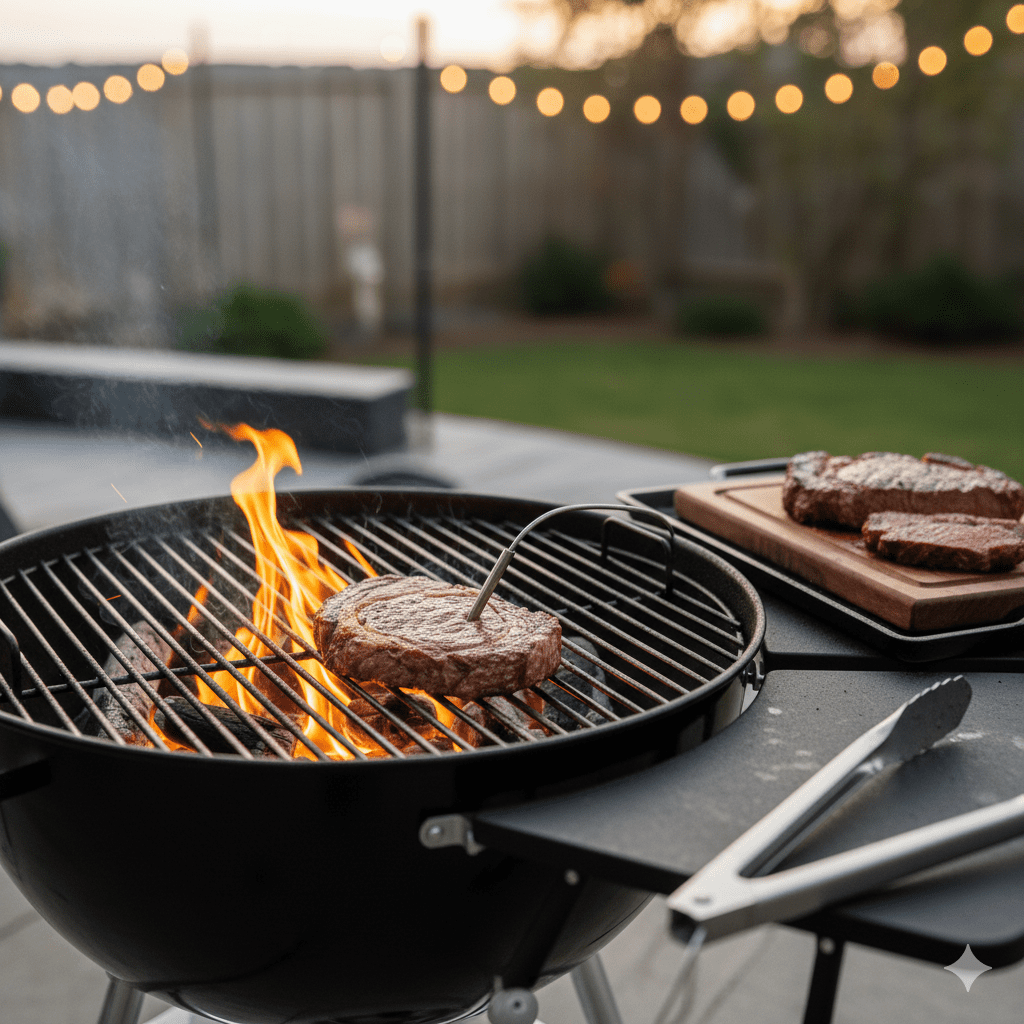
To grill a steak perfectly, season it generously, preheat your grill to high heat (450-500°F), sear each side for 2-3 minutes, then move to medium heat until it reaches your desired internal temperature. This comprehensive guide will walk you through each step of the process, from selecting the right cut to achieving that restaurant-quality finish every time.
Essential Tools for Grilling the Perfect Steak
Before you start grilling, gather these essential tools to ensure success. Having the right equipment makes the difference between a good steak and a great one.

- Long-handled tongs – For safely flipping steaks without piercing the meat. The OXO Good Grips 16-inch Tongs provide excellent control.
- Instant-read thermometer – The most reliable way to check doneness. The ThermoPro TP19 gives readings in 2-3 seconds.
- Grill brush – For cleaning grill grates before cooking. Look for a sturdy brush with stainless steel bristles.
- Metal spatula – Helpful for handling delicate cuts or removing steaks from the grill.
- Timer – While you’ll primarily use temperature to determine doneness, a timer helps track cooking stages.
- Aluminum foil – For tenting steaks during the resting period.
- Plates or cutting board – For resting and serving your perfectly grilled steak.
Must-Have Grilling Tool
An accurate meat thermometer is the #1 tool for perfect steaks every time. Stop guessing and start knowing exactly when your steak is done.
Choosing the Right Cut of Steak
The cut of steak you select significantly impacts your grilling results. Each cut has different characteristics that affect cooking time, technique, and flavor.

| Cut | Characteristics | Best For | Cooking Difficulty |
| Ribeye | Highly marbled with excellent flavor | Direct high-heat grilling | Easy |
| New York Strip | Good balance of tenderness and flavor | Direct high-heat grilling | Medium |
| Filet Mignon | Extremely tender, less flavorful | Quick searing, medium-rare finish | Medium |
| T-Bone/Porterhouse | Two steaks in one (strip and filet) | Two-zone grilling | Hard |
| Flank/Skirt | Thin, flavorful, can be tough | Hot and fast grilling, marinades | Medium |
Beginner’s Tip: If you’re new to grilling steak, start with ribeye. Its high fat content makes it more forgiving if you slightly overcook it, and it delivers excellent flavor.
Thickness Matters
For best results, choose steaks that are at least 1-1.5 inches thick. Thinner steaks cook too quickly and are easy to overcook, while thicker steaks allow more control over doneness. I once ruined a beautiful but thin ribeye by leaving it on the grill for just 30 seconds too long—it went from perfect to overdone in moments.
Preparing Your Steak for the Grill
Proper preparation is crucial for a perfectly grilled steak. These steps happen before your steak ever touches the grill.

Bringing to Room Temperature
Remove your steak from the refrigerator 30-40 minutes before grilling. This allows for more even cooking from edge to center. Don’t worry—this short time at room temperature is food-safe and makes a noticeable difference in how evenly your steak cooks.
Seasoning Your Steak
Simple seasonings often work best for quality steaks. For beginners, I recommend starting with the basics:
- Kosher salt – Its coarse texture adheres well to meat. Apply generously.
- Freshly ground black pepper – Adds classic flavor and slight texture.
- Optional: garlic powder – A subtle addition that enhances the beef flavor.
Season your steak generously—more than you might think necessary. Much of it will fall off during cooking, and proper seasoning makes all the difference in the final flavor.
Oil: Yes or No?
Lightly brushing your steak with a high smoke-point oil like avocado or grapeseed can help prevent sticking and promote better browning. However, if your grill is properly preheated and cleaned, it’s not always necessary—especially for fattier cuts like ribeye.
Pro Tip: Pat your steak dry with paper towels before seasoning. Removing surface moisture helps develop a better crust when grilling.
Setting Up Your Grill for Steak
The way you set up your grill significantly impacts your results. Different types of grills require slightly different approaches.

Two-Zone Fire Setup
For maximum control, create two temperature zones on your grill:
Direct Heat Zone (Hot)
This high-heat area is for searing and creating a flavorful crust. Aim for 450-500°F in this zone.
Indirect Heat Zone (Medium)
This moderate-heat area allows for gentler cooking after searing, preventing burning while the steak reaches desired doneness.
Setting Up Different Grill Types
| Grill Type | Two-Zone Setup Method | Preheat Time |
| Charcoal | Pile all coals on one side of the grill | 15-20 minutes after coals are lit |
| Gas (2 burners) | Set one burner to high, one to low/off | 10-15 minutes |
| Gas (3+ burners) | Set half the burners to high, half to low/off | 10-15 minutes |
| Pellet | Set to 450°F, use upper rack for indirect heat | 15-20 minutes |
Safety First: Always open the lid before lighting a gas grill to prevent dangerous gas buildup. For charcoal, never use lighter fluid on hot coals—it can cause dangerous flare-ups.
Cleaning and Oiling Grill Grates
Clean grates prevent sticking and help create perfect grill marks. After preheating, scrub grates with a grill brush to remove any residue. Then, oil the grates by soaking a folded paper towel in vegetable oil and using tongs to rub it across the grates.
How Do You Grill a Steak: Step-by-Step Process
Now for the main event—grilling your steak to perfection. Follow these steps for consistent results every time.

- Place the steak on the hot zonePlace your room-temperature, seasoned steak on the direct heat zone. Close the lid if using a gas grill; leave it open for charcoal.
- Sear the first sideLet the steak sear undisturbed for 2-3 minutes for a 1-inch steak (3-4 minutes for 1.5-inch). Resist the urge to move it—this ensures proper searing.
- Flip once and sear the second sideUsing tongs (never a fork, which would pierce the meat), flip the steak and sear the second side for the same amount of time.
- Move to indirect heatTransfer the steak to the indirect heat zone to finish cooking to your desired doneness. Close the lid to create an oven-like environment.
- Check temperatureUse your instant-read thermometer to check the internal temperature. Insert it into the side of the steak, reaching the center.
- Remove at the right temperatureRemove the steak 5°F before your target temperature, as it will continue cooking during rest time.
- Rest before cuttingPlace the steak on a plate or cutting board, tent loosely with foil, and let rest for 5-10 minutes before cutting.
Steak Temperature Guide
Use this temperature guide to achieve your preferred level of doneness:
| Doneness | Remove at | Final Temp | Description |
| Rare | 120°F | 125°F | Red, cool center |
| Medium-Rare | 130°F | 135°F | Red, warm center |
| Medium | 140°F | 145°F | Pink center |
| Medium-Well | 150°F | 155°F | Slightly pink center |
| Well-Done | 160°F | 165°F | Little to no pink |

Never Guess Doneness Again
A reliable meat thermometer is the secret to perfectly cooked steaks every time. The ThermoPro TP19 gives instant readings and takes the guesswork out of grilling.
Steak Grilling Time Chart
While temperature is the most reliable indicator of doneness, these time estimates can help you plan your grilling session.
| Thickness | Rare (125°F) |
Medium-Rare (135°F) |
Medium (145°F) |
Well-Done (165°F) |
| 1 inch | 4-5 min total | 5-7 min total | 7-9 min total | 10-12 min total |
| 1.5 inches | 6-8 min total | 8-10 min total | 10-12 min total | 14-16 min total |
| 2 inches | 9-11 min total | 11-13 min total | 13-15 min total | 18-20 min total |
Note: These times are estimates for a two-zone grilling method with initial searing followed by indirect heat cooking. Actual times may vary based on your specific grill, heat level, and the starting temperature of your steak.
Common Steak Grilling Mistakes to Avoid
Even experienced grillers make these mistakes. Learn from them to improve your steak grilling game.

What To Do
- Pat steaks dry before seasoning
- Preheat your grill thoroughly
- Use a thermometer to check doneness
- Let steaks rest after cooking
- Clean and oil grates before cooking
- Create two heat zones for control
What Not To Do
- Flip steaks constantly or press down on them
- Cook cold steaks straight from refrigerator
- Pierce steaks with a fork while grilling
- Skip the resting period after cooking
- Rely on cooking time alone for doneness
- Overcrowd the grill with too many steaks
Troubleshooting Common Issues
| Problem | Possible Cause | Solution |
| Excessive flare-ups | Fat dripping onto flames | Trim excess fat, move steak to indirect heat temporarily |
| Steak sticking to grill | Grill not hot enough or not oiled | Ensure proper preheating and oil grates before cooking |
| Burnt exterior, raw interior | Heat too high, steak too cold or thick | Use two-zone method, bring steak to room temperature |
| Tough, chewy steak | Overcooked or cut against grain | Use thermometer, slice against grain when serving |
| Bland flavor | Insufficient seasoning | Season generously before grilling |
I once ruined an expensive ribeye by constantly flipping and moving it around the grill. I’ve learned that patience is key—let the grill do its work and resist the urge to fiddle with your steak.
Finishing Touches and Serving Suggestions
The final steps after grilling can elevate your steak from good to extraordinary.

Resting Your Steak
Resting is crucial—it allows juices to redistribute throughout the meat instead of spilling out when cut. Rest your steak for 5-10 minutes, loosely tented with foil to keep it warm without trapping steam that would soften your crust.
Flavor Enhancers
These optional additions can take your steak to the next level:
- Compound butter – Mix softened butter with herbs, garlic, or blue cheese and place a pat on hot steak.
- Finishing salt – A sprinkle of flaky sea salt adds texture and enhances flavor.
- Fresh herbs – Chopped rosemary, thyme, or parsley adds color and aroma.
- Sauce options – Chimichurri, béarnaise, or a simple red wine reduction.
Slicing for Service
For the best texture, always slice steak against the grain (perpendicular to the muscle fibers). This shortens the fibers and makes each bite more tender. For sharing, pre-slice the steak and arrange on a warm platter.
Pro Tip: If serving sliced steak, cut it just before serving. Pre-slicing too early allows juices to escape and the meat to cool more quickly.
Frequently Asked Questions About Grilling Steak
Answers to common questions about how do you grill a steak perfectly every time.

Should I close the grill lid when cooking steak?
It depends on your grill type and the steak thickness. For gas grills, closing the lid creates an oven-like environment that helps cook thicker steaks more evenly. For charcoal grills, closing the lid reduces oxygen, lowering the temperature. For thin steaks (under 3/4 inch), leave the lid open. For thicker steaks, close the lid after searing to finish cooking.
How many times should I flip a steak on the grill?
Contrary to popular belief, flipping once isn’t a strict rule. While you should let the steak sear undisturbed for the first 2-3 minutes, after that, you can flip as needed. Some chefs prefer flipping every 30 seconds for even cooking. The key is not to pierce the meat when flipping—always use tongs.
Should I marinate my steak before grilling?
It depends on the cut. Premium steaks like ribeye, strip, and filet mignon don’t need marinating—simple salt and pepper is sufficient. Less expensive or tougher cuts like flank, skirt, or sirloin benefit from marinating for 2-24 hours to add flavor and tenderize. Avoid acidic marinades for more than 24 hours as they can make meat mushy.
How do I get perfect grill marks on my steak?
For perfect grill marks: 1) Ensure grates are clean and hot, 2) Pat steak dry before grilling, 3) Place steak at a 45-degree angle to grates, 4) Don’t move the steak for 2-3 minutes, 5) Rotate 90 degrees and cook another 2 minutes, 6) Flip and repeat on the other side. The key is a hot grill and minimal movement.
What’s the best way to tell if my steak is done without a thermometer?
The “finger test” is a traditional method: Compare the firmness of your steak to the fleshy part of your palm below your thumb. When your hand is relaxed, that softness is comparable to rare. Touch thumb to index finger—that firmness is medium-rare. Middle finger—medium. Ring finger—medium-well. Pinky—well-done. However, this method takes practice and isn’t as reliable as using a thermometer.
Mastering the Art of Grilled Steak
Grilling the perfect steak combines science, technique, and a bit of artistry. With the right tools, proper preparation, and attention to temperature, you can create restaurant-quality steaks in your own backyard.

Remember that practice makes perfect. Each time you grill, you’ll learn more about your equipment, develop better timing, and refine your technique. Don’t be discouraged by occasional mistakes—they’re part of the learning process.
Whether you’re grilling for a special occasion or a weeknight dinner, these fundamentals will help you achieve consistent, delicious results. So fire up that grill, select a quality steak, and enjoy the satisfaction of serving a perfectly grilled steak that you’ve prepared with your own hands.
The perfect steak isn’t just about technique—it’s about bringing people together around the grill and creating memorable meals. That’s the true joy of mastering how to grill a steak.
