


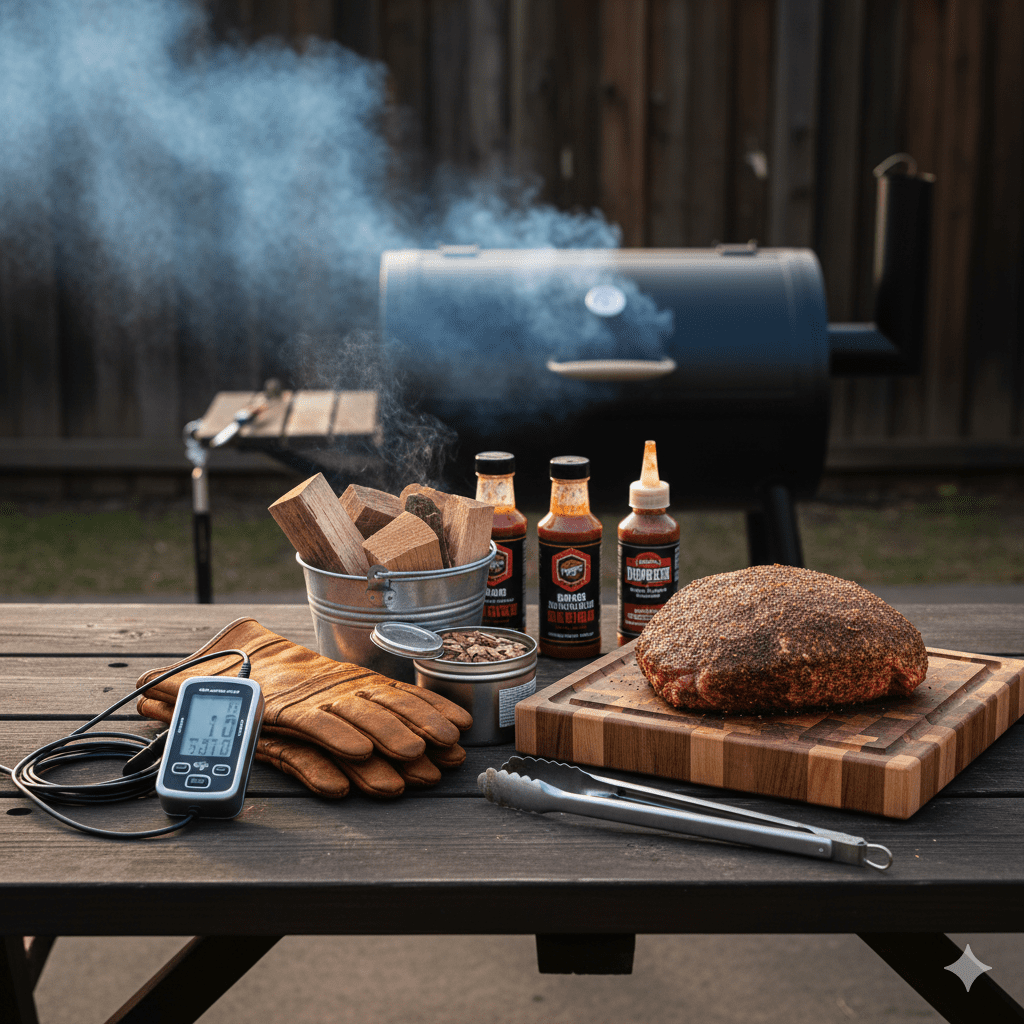
Smoker cooking tips help you master low and slow barbecue with perfect smoke flavor. I’ll show you exactly how to avoid common mistakes and get restaurant-quality results at home. After ruining my first brisket by constantly peeking inside the smoker (a rookie mistake!), I’ve learned what truly works for consistent, delicious results. This guide covers everything from choosing the right equipment to mastering temperature control and selecting the perfect wood for your meat.
Essential Smoker Cooking Tools
Before you start your smoking journey, gather these must-have tools. I’ve learned through trial and error that having the right equipment makes all the difference between frustration and success.
- Quality smoker (Weber Smokey Mountain, Traeger Pro Series, or Masterbuilt)
- Digital meat thermometer with dual probes (one for meat, one for smoker temperature)
- Heat-resistant gloves for handling hot food and equipment
- Aluminum drip pans for catching fat and maintaining moisture
- Chimney starter for lighting charcoal quickly and evenly
- Wood chunks or chips appropriate for your meat selection
- Sharp knife for trimming and slicing meat properly
- Spray bottle for spritzing meat (apple juice or water)
- Heavy-duty aluminum foil for wrapping during the stall period
- Insulated cooler for resting large cuts of meat

Types of Smokers: Finding Your Perfect Match
Different smoker types offer unique advantages. I started with a basic charcoal smoker before upgrading, and I recommend beginners do the same to learn the fundamentals.
| Smoker Type | Pros | Cons | Best For | Price Range |
| Charcoal Smoker | Authentic flavor, affordable, teaches fundamentals | Requires more attention, temperature fluctuations | Traditional BBQ enthusiasts, learning the craft | $150-$500 |
| Pellet Smoker | Set-and-forget convenience, consistent temperature | Less intense smoke flavor, requires electricity | Busy people who want convenience | $400-$1,500 |
| Electric Smoker | Easiest to use, very consistent temperature | Least authentic flavor, requires electricity | Absolute beginners, apartment dwellers | $200-$500 |
| Offset Smoker | Most authentic flavor, large capacity | Steepest learning curve, most attention required | Experienced smokers, large gatherings | $300-$2,000+ |

Wood Selection Guide: Matching Flavors to Meats
The wood you choose dramatically impacts your final flavor. I’ve experimented with countless combinations, and these pairings consistently deliver excellent results.
Mild Woods
- Apple: Sweet, mild flavor perfect for poultry and pork
- Cherry: Slightly sweet with a beautiful color for chicken and ribs
- Peach: Subtle sweetness ideal for delicate fish and poultry
Medium Woods
- Hickory: Classic BBQ flavor, versatile for most meats
- Maple: Mild sweetness that works well with poultry and ham
- Pecan: Nutty flavor perfect for poultry and pork shoulder
Strong Woods
- Mesquite: Bold flavor best for beef brisket and short ribs
- Oak: Strong but not overpowering, excellent for brisket
- Walnut: Intense flavor, use sparingly with beef
Never use softwoods like pine or cedar for cooking. They contain resins that produce unpleasant flavors and can be harmful when consumed.

Temperature Guide: The Key to Perfect Smoker Cooking
Maintaining the right temperature is crucial for successful smoking. I keep this chart handy during every cook to ensure perfect results every time.
| Meat Type | Smoker Temp | Target Internal Temp | Approx. Time Per Pound | Rest Time |
| Brisket (whole packer) | 225°F | 203°F | 1.5 hours | 1-2 hours |
| Pork Shoulder/Butt | 250°F | 195-205°F | 1.5 hours | 1 hour |
| Pork Ribs (St. Louis) | 250°F | 195°F (or bend test) | 5-6 hours total | 10-15 minutes |
| Chicken (whole) | 275°F | 165°F | 45 minutes | 15-20 minutes |
| Turkey (whole) | 275°F | 165°F | 30-40 minutes | 30 minutes |
| Beef Ribs | 250°F | 203°F | 6-8 hours total | 30 minutes |
Always use a reliable dual-probe thermometer to monitor both the smoker temperature and the internal meat temperature. Never rely solely on the built-in thermometer that comes with most smokers—they’re notoriously inaccurate.

Step-by-Step Smoker Cooking Process
Follow these steps for consistently great results. I’ve refined this process over years of smoking meats for family and friends.
- Prepare your meat: Trim excess fat, leaving about ¼ inch for flavor and moisture. Apply a thin layer of mustard or oil as a binder, then season generously with your rub of choice.
- Prepare your smoker: Clean your smoker and remove old ash. For charcoal smokers, use a chimney starter to light your charcoal until it’s ashed over.
- Set up for indirect heat: Arrange your heat source to one side with a water pan on the other side to maintain humidity and catch drippings.
- Preheat thoroughly: Allow your smoker to reach the target temperature and stabilize for at least 15-20 minutes before adding meat.
- Add wood chunks/chips: Place 2-3 wood chunks on the coals or fill your chip box. Wait for clean smoke before adding meat.
- Position the meat: Place meat on the grate away from direct heat. Insert temperature probe if using.
- Maintain temperature: Adjust vents to maintain your target temperature. Add fuel as needed.
- Spritz occasionally: After the first 2 hours, spritz with apple juice or water every 45-60 minutes to keep the surface moist.
- Handle the stall: For large cuts, wrap in butcher paper or foil when internal temperature stalls (usually around 165°F).
- Test for doneness: Use both temperature readings and feel. Probe should slide in like butter when done.
- Rest properly: Rest smaller cuts for 15-30 minutes, larger cuts for 1-2 hours wrapped in towels in a cooler.
- Slice against the grain: Always slice perpendicular to the muscle fibers for maximum tenderness.

Mastering Vent Control and Smoke Quality
Understanding how to control your vents is crucial for maintaining temperature and achieving the perfect smoke. This was my biggest learning curve when starting out.
Vent Control Basics
- Bottom vents: Control oxygen intake and heat level. More open = hotter fire.
- Top vents: Control smoke flow and help regulate temperature. Never fully close.
- For higher temps: Open bottom vents more, keep top vents open.
- For lower temps: Partially close bottom vents, keep top vents partially open.
- Small adjustments: Make tiny vent changes and wait 15 minutes to see effects.
Smoke Quality Guide
- Thin blue smoke: Ideal! Nearly invisible, light blue color. Creates the best flavor.
- White billowing smoke: Avoid! Indicates incomplete combustion, creates bitter taste.
- Black smoke: Dangerous! Indicates grease fire or burning materials.
- No visible smoke: Still imparts flavor if you can smell it. Better than white smoke.
- Dirty smoke fix: Open vents more to increase airflow and combustion efficiency.
The secret to great BBQ is patience with your vents. I made the mistake of constantly adjusting them when I started. Now I make small changes and wait at least 15 minutes before adjusting again.

7 Common Smoker Cooking Mistakes to Avoid
Learn from my mistakes so you don’t have to make them yourself. These are the most common errors that can ruin your barbecue.
1. Opening the Lid Too Often
Every time you peek, you lose heat and extend cooking time. I ruined my first brisket this way. Trust your thermometer instead of your eyes.
2. Not Preheating Properly
Starting with a cold smoker leads to temperature fluctuations and extended cook times. I always preheat for at least 30 minutes now.
3. Using Too Much Wood
More wood doesn’t mean more flavor—it means bitter, over-smoked meat. Start with 2-3 chunks and add more only when smoke disappears.
4. Ignoring the Stall
Large cuts hit a “stall” around 150-170°F where temperature plateaus. Don’t panic or crank the heat—wrap in butcher paper to push through.
5. Skipping the Rest Period
Cutting meat immediately after cooking loses all those precious juices. I always rest brisket for at least an hour, sometimes two.
6. Overseasoning
Heavy seasoning masks the natural meat flavor and smoke. A simple salt and pepper rub often works best, especially for beef.
The most dangerous mistake is leaving your smoker unattended for long periods. While you don’t need to hover, check it every hour for safety and to maintain proper temperature.

Smoker Cooking Tips: Troubleshooting Guide
Even experienced pitmasters encounter problems. Here’s how to diagnose and fix common smoking issues I’ve faced over the years.
| Problem | Possible Causes | Solution |
| Temperature won’t stay consistent | Leaky smoker, improper vent settings, weather conditions | Seal leaks with high-temp gasket tape, make smaller vent adjustments, use a windbreak in windy conditions |
| Meat cooking too quickly | Smoker running too hot, thermometer inaccuracy | Reduce airflow by partially closing intake vents, verify temperature with reliable thermometer |
| Meat cooking too slowly | Smoker temperature too low, meat too cold when started | Increase airflow by opening vents more, let meat come to room temperature before smoking |
| Meat tastes bitter or too smoky | Dirty smoke, too much wood, wrong wood type | Ensure proper airflow for clean combustion, use less wood, switch to milder wood variety |
| Dry meat despite correct temperature | No water pan, lean cut, overcooked | Use water pan for humidity, choose fattier cuts, wrap meat during later stages of cooking |
| Bark won’t form properly | Too much moisture, wrapping too early, low temperature | Reduce spritzing frequency, wait until bark is set before wrapping, increase temperature slightly |

Frequently Asked Questions About Smoker Cooking
How long does it take to smoke a brisket?
A whole packer brisket (12-15 pounds) typically takes 12-16 hours at 225°F. Plan for about 1.5 hours per pound, plus a 1-2 hour rest period. Always cook to temperature (203°F internal), not time. I’ve had some briskets finish in 10 hours and others take 18 hours—each piece of meat is unique.
What’s the best wood for smoking chicken?
Fruit woods like apple, cherry, and peach are ideal for chicken as they provide a mild, sweet flavor that doesn’t overpower the delicate meat. Maple and pecan also work well. Avoid strong woods like mesquite or hickory for chicken as they can make it taste bitter.
Should I soak wood chips before smoking?
Contrary to popular belief, soaking wood chips doesn’t make them smoke longer—it just delays combustion until they dry out. I stopped soaking years ago and get better results with dry chips. For longer smoke duration, use larger wood chunks instead of chips, or add small amounts of chips more frequently.
What’s the 3-2-1 method for ribs?
The 3-2-1 method is a foolproof way to smoke ribs: smoke for 3 hours unwrapped at 225°F, wrap in foil with liquid for 2 hours, then unwrap and smoke for 1 final hour with sauce. For St. Louis ribs, I prefer a modified 3-2-1 method (more like 3-1.5-0.5) to prevent them from becoming too tender and falling apart.
How do I maintain temperature in cold weather?
Smoking in cold weather requires some adjustments: use a thermal blanket designed for your smoker model, create a windbreak, start with more fuel than usual, and position your smoker out of direct wind. I’ve successfully smoked in 20°F weather by using an insulated jacket for my smoker and keeping extra fuel ready.

Final Thoughts: Your Smoker Cooking Journey
Mastering smoker cooking takes practice, but the rewards are worth it. Start with forgiving cuts like pork shoulder before attempting brisket. Take notes during each cook to track what works and what doesn’t. Most importantly, enjoy the process—smoking meat is as much about the journey as the destination. The tips in this guide will help you avoid the mistakes I made and fast-track your way to incredible barbecue that will impress family and friends.

