


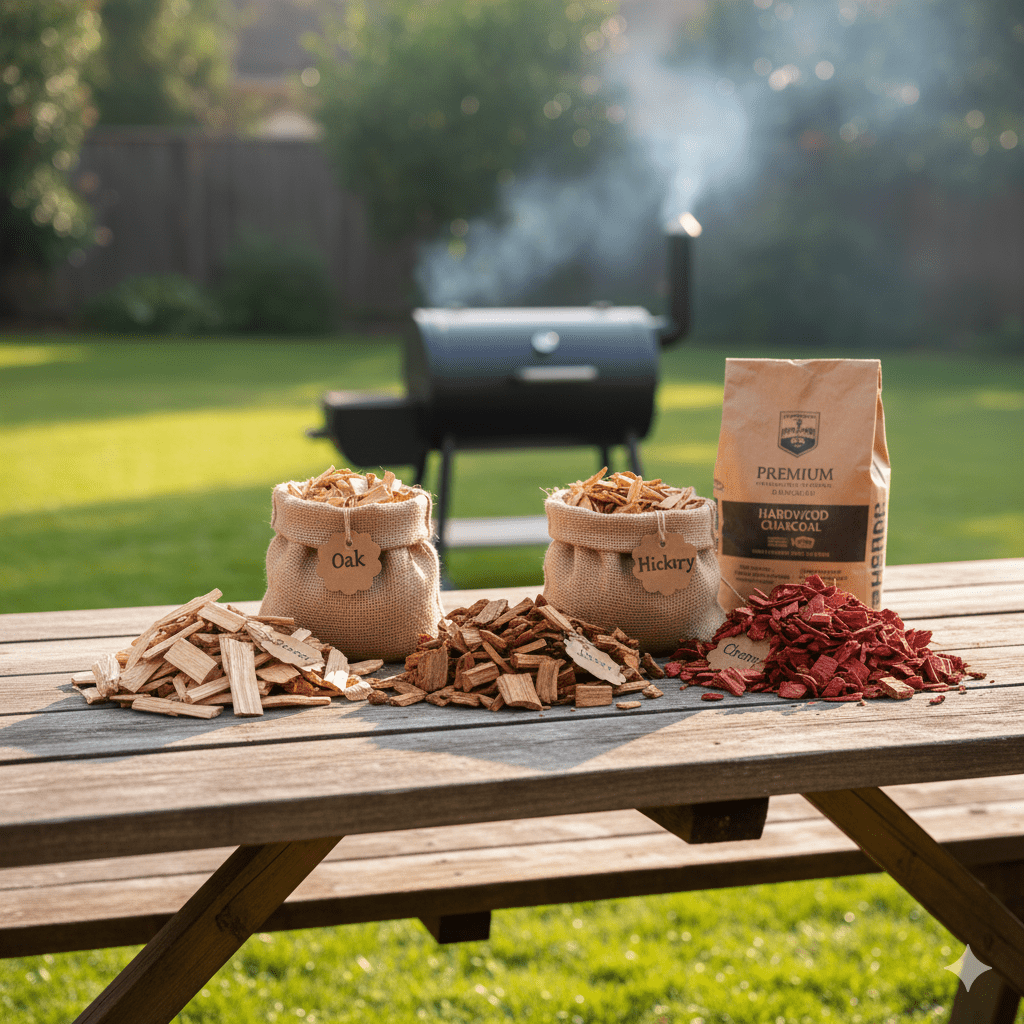
The best wood for smoked tri tip is oak, which provides a medium-strong flavor that complements the beef without overpowering it. Hickory and cherry are excellent alternatives, with hickory offering a stronger, bacon-like flavor and cherry providing a milder, slightly sweet profile. Choosing the right wood is crucial for developing that perfect smoky flavor that makes tri tip shine.
Essential Tools for Smoking Tri Tip

- Smoker or grill (pellet, electric, or charcoal)
- Digital meat thermometer (preferably with dual probes)
- Wood chips, chunks, or pellets (oak, hickory, cherry recommended)
- Heat-resistant gloves
- Aluminum drip pan
- Spray bottle for water or apple juice
- Sharp knife for slicing against the grain
- Cast iron skillet (optional, for reverse searing)
My Recommended Thermometer
I’ve tried many thermometers, but the ThermoPro TP20 has been the most reliable for smoking tri tip. The dual probes let me monitor both meat and smoker temperatures simultaneously.
Safety First: Essential Smoking Precautions
Always place your smoker on a level, heat-resistant surface at least 10 feet from any structures. Never leave a lit smoker unattended, and keep a fire extinguisher nearby. Food safety is equally important—always cook tri tip to a safe internal temperature of at least 125°F for rare (though I recommend 135°F for medium-rare).
I learned this lesson the hard way when I once placed my smoker too close to my wooden deck railing. The heat discolored the wood, and I was lucky it didn’t catch fire. Safety might not be exciting, but it’s essential for an enjoyable smoking experience.
Choosing Your Smoker Type

| Smoker Type | Pros | Cons | Best For |
| Charcoal Smoker | Authentic smoke flavor, high heat capability | Requires more skill, temperature management | Purists seeking traditional flavor |
| Pellet Smoker | Easy temperature control, consistent results | More expensive, less intense smoke flavor | Beginners and convenience-minded smokers |
| Electric Smoker | Set-and-forget operation, very consistent | Limited smoke ring, less authentic flavor | Apartment dwellers, beginners |
| Gas Grill (with smoker box) | Versatile, likely already owned | Less smoke penetration, harder to maintain low temps | Casual smokers with limited space |
I started with a Weber kettle grill using the indirect heat method before upgrading to a dedicated smoker. For beginners, I recommend a pellet smoker like the Traeger Pro 575 for its ease of use while still delivering excellent results.
Beginner-Friendly Smoker
The Traeger Pro 575 Pellet Grill and Smoker is what I recommend to friends just starting out. It’s practically foolproof with its digital controller and consistent temperature.
Temperature & Timing Guide for Perfect Tri Tip

| Doneness | Pull Temperature | Final Temperature | Approximate Time |
| Rare | 125°F (52°C) | 130°F (54°C) | 45-60 minutes |
| Medium Rare | 135°F (57°C) | 140°F (60°C) | 60-75 minutes |
| Medium | 145°F (63°C) | 150°F (66°C) | 75-90 minutes |
I don’t recommend cooking tri tip past medium as it becomes tough and dry. The sweet spot is medium-rare, which preserves the meat’s natural juiciness while ensuring it’s properly cooked.
Remember that tri tip will continue cooking after you remove it from the smoker (called carryover cooking). That’s why we pull it 5°F below the target temperature. I once overcooked a beautiful tri tip by forgetting about this principle—don’t make my mistake!
Best Wood for Smoked Tri Tip: Detailed Breakdown

Oak (Top Choice)
Oak is my go-to wood for smoking tri tip. It provides a medium-strong flavor that complements beef perfectly without overpowering it. The smoke is clean and creates a beautiful bark on the outside of the meat.
Pros
- Balanced, not too strong
- Burns consistently
- Widely available
- Creates excellent bark
Cons
- Less distinctive than some woods
- Can be too subtle for some
Hickory
Hickory provides a stronger, bacon-like flavor that many BBQ enthusiasts love. It’s more intense than oak, making it perfect if you want a more pronounced smoke flavor in your tri tip.
Pros
- Rich, distinctive flavor
- Creates excellent smoke ring
- Widely available
- Traditional BBQ taste
Cons
- Can overpower if used too much
- Not ideal for delicate flavors
Cherry
Cherry wood imparts a mild, slightly sweet flavor and gives the meat a beautiful reddish hue. It’s gentler than oak or hickory, making it perfect for those who prefer a subtler smoke profile.
Pros
- Mild, sweet flavor
- Adds beautiful color
- Works well for beginners
- Great for blending
Cons
- May be too subtle alone
- Burns faster than harder woods
Mesquite
Mesquite delivers an intense, earthy flavor that’s iconic in Texas BBQ. While delicious, it’s very strong and can easily overpower tri tip if not used carefully.
Pros
- Distinctive, bold flavor
- Burns hot
- Authentic Southwest taste
Cons
- Very easy to overpower meat
- Can create bitter taste if used too much
- Burns quickly
Wood Combinations Worth Trying
My personal favorite combination is 70% oak with 30% cherry. This gives you the solid foundation of oak with a hint of sweetness and color from the cherry. Another excellent blend is 60% hickory with 40% apple for a balance of strong and sweet.
Premium Smoking Woods
Western Premium BBQ Products Oak Cooking Chunks provide consistent, clean-burning smoke that’s perfect for tri tip. I’ve found them to be more reliable than cheaper brands.
Step-by-Step Smoking Instructions

- Prepare your tri tip: Trim excess fat if needed, leaving about ¼ inch of fat cap. Apply a light coat of olive oil followed by your favorite rub. Let sit at room temperature for 30-45 minutes.
- Prepare your smoker: Preheat to 225°F (107°C). Add your chosen wood chips, chunks, or pellets according to your smoker’s instructions.
- Insert temperature probes: Place one probe in the thickest part of the tri tip and another to monitor smoker temperature if your unit doesn’t have a built-in thermometer.
- Smoke the tri tip: Place the meat fat side up on the grates. Close the lid and maintain a steady temperature of 225-235°F.
- Monitor without opening: Resist the urge to open the smoker frequently as this releases heat and smoke. Use your thermometer to track progress.
- Pull at target temperature: Remove the tri tip when it reaches 5°F below your desired final temperature (see temperature chart above).
- Optional reverse sear: For an amazing crust, sear the tri tip for 1-2 minutes per side in a hot cast iron skillet with butter and herbs.
- Rest properly: Let the tri tip rest for 15 minutes loosely tented with foil before slicing against the grain.
Pro Tip: Tri tip has grain running in two different directions. To slice properly, cut the roast in half where the grain changes direction, then slice each piece against its grain for maximum tenderness.
Smoke Management: Color and Quality

The color and quality of your smoke directly impacts the flavor of your tri tip. Aim for thin blue smoke, which indicates complete combustion and clean flavor. Thick white smoke creates bitter, acrid flavors that can ruin your meat.
| Smoke Color | What It Means | Flavor Impact | How to Fix |
| Thin Blue | Perfect combustion | Clean, pure smoke flavor | Maintain this ideal |
| White/Gray | Incomplete combustion | Bitter, acrid taste | Improve airflow, use drier wood |
| Black | Too much fuel, poor airflow | Sooty, unpleasant | Reduce fuel, clean vents |
| No Visible Smoke | Could be very clean burn or no smoke | Potentially insufficient smoke flavor | Add more wood, check that wood is burning |
Common Beginner Mistakes & How to Fix Them

Using too much wood
I made this mistake when I first started smoking. More wood doesn’t mean better flavor—it often results in bitter, overpowering smoke. Solution: Start with less wood than you think you need. For tri tip, 2-3 chunks or a handful of chips is usually sufficient.
Opening the smoker too often
Every time you open the smoker, you lose heat and smoke, extending cooking time and reducing smoke penetration. Solution: Trust your thermometer and resist the urge to peek. As the saying goes, “If you’re looking, you’re not cooking.”
Skipping the rest period
Cutting into tri tip immediately after smoking causes all the juices to run out onto your cutting board. Solution: Always rest your tri tip for at least 15 minutes loosely tented with foil. This allows juices to redistribute throughout the meat.
Slicing with the grain
Tri tip has grain running in two directions, making it tricky to slice properly. Cutting with the grain results in chewy meat. Solution: Identify where the grain changes direction (usually in the middle), cut the roast in half at this point, then slice each piece against its grain.
Troubleshooting Guide
| Problem | Possible Causes | Solution |
| Too much smoke flavor | Too much wood, wrong wood type, poor ventilation | Use less wood, switch to milder wood like oak or cherry, ensure proper airflow |
| Not enough smoke flavor | Too little wood, wood not burning properly, too short cooking time | Add more wood, ensure wood is properly lit, consider longer smoking time at lower temp |
| Tough, dry meat | Overcooked, poor quality meat, improper slicing | Use a thermometer, cook to medium-rare, slice against the grain |
| Temperature spikes | Too much air, wood catching fire, smoker in direct sun | Adjust vents, use fewer wood chunks, place smoker in shade |
| Temperature drops | Running out of fuel, weather conditions, opening lid too often | Monitor fuel levels, shield from wind, keep lid closed |
Frequently Asked Questions
Can I mix different types of wood when smoking tri tip?
Absolutely! Mixing woods can create complex flavor profiles. Try combining a stronger wood like hickory (60%) with a milder fruit wood like apple or cherry (40%). I’ve found this creates a balanced flavor that complements tri tip beautifully.
How long should I smoke tri tip?
At 225°F, a 2-3 pound tri tip typically takes 60-90 minutes to reach medium-rare (135°F internal temperature). However, always cook to temperature, not time. Use a good digital thermometer to monitor the internal temperature for perfect results.
Should I wrap my tri tip in foil while smoking?
Unlike brisket or pork shoulder, tri tip doesn’t benefit from being wrapped (the “Texas crutch”). It’s a relatively quick cook that doesn’t need help pushing through the stall. Leaving it unwrapped allows for maximum smoke penetration and better bark formation.
Can I use wood chips instead of chunks?
Yes, but they burn much faster. If using chips, soak them in water for 30 minutes before adding to the smoker, or use a smoker box to slow their burn rate. Wood chunks are generally better for longer smokes as they provide more consistent smoke.
What woods should I avoid for tri tip?
Avoid soft, resinous woods like pine, spruce, or cedar, which contain saps that can make your food taste like turpentine. Also, be cautious with very strong woods like mesquite unless you’re experienced—they can easily overpower the natural flavor of tri tip.
Pro Tips From My Experience

I ruined my first tri tip by using too much mesquite wood. The meat was so bitter we couldn’t eat it. Now I stick to oak as my base and add small amounts of other woods for accent flavors.
- Less is more with smoke. You can always add more wood, but you can’t remove smoke flavor once it’s there.
- Quality matters. Invest in good quality wood from reputable brands rather than random bags from the hardware store.
- Consistency is key. Once you find a wood type or combination you like, stick with it and perfect your technique.
- Try the reverse sear. Smoking to 125°F then finishing with a hot sear in a cast iron skillet creates an amazing crust while keeping the inside perfectly medium-rare.
- Rest in a cooler. For larger gatherings, wrap the finished tri tip in foil, then in towels, and place in a cooler. It will stay warm for up to an hour while you prepare other dishes.
Complete Your Smoking Setup
The Lodge 12-inch Cast Iron Skillet is perfect for reverse searing your smoked tri tip. I’ve had mine for years and it just gets better with age.
Conclusion: Finding Your Perfect Wood
The best wood for smoked tri tip ultimately depends on your personal preference. Oak provides a reliable, balanced flavor that works well for most people, while hickory offers a stronger profile and cherry adds sweetness and color. Don’t be afraid to experiment with different woods and combinations until you find your perfect match.
Remember that smoking is both an art and a science. While this guide provides a solid foundation, your own experience and taste preferences will guide you to your ideal smoking technique. Start with these recommendations, take notes on what works for you, and enjoy the delicious journey of perfecting your smoked tri tip!
Ready to Start Smoking?
Get a variety pack of premium smoking woods to experiment with different flavors for your tri tip.
